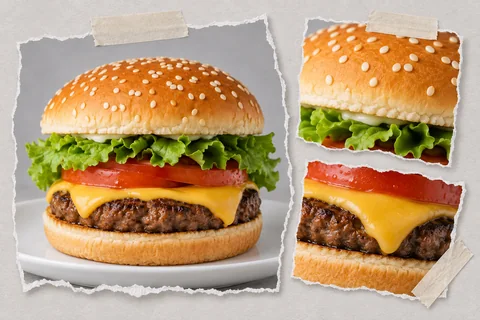
/COLLAGE · CHATGPT
Editorial photo collage
Arrange three deliberate cut photographic fragments of the source into a balanced tactile editorial collage on plain paper.
foodpeople
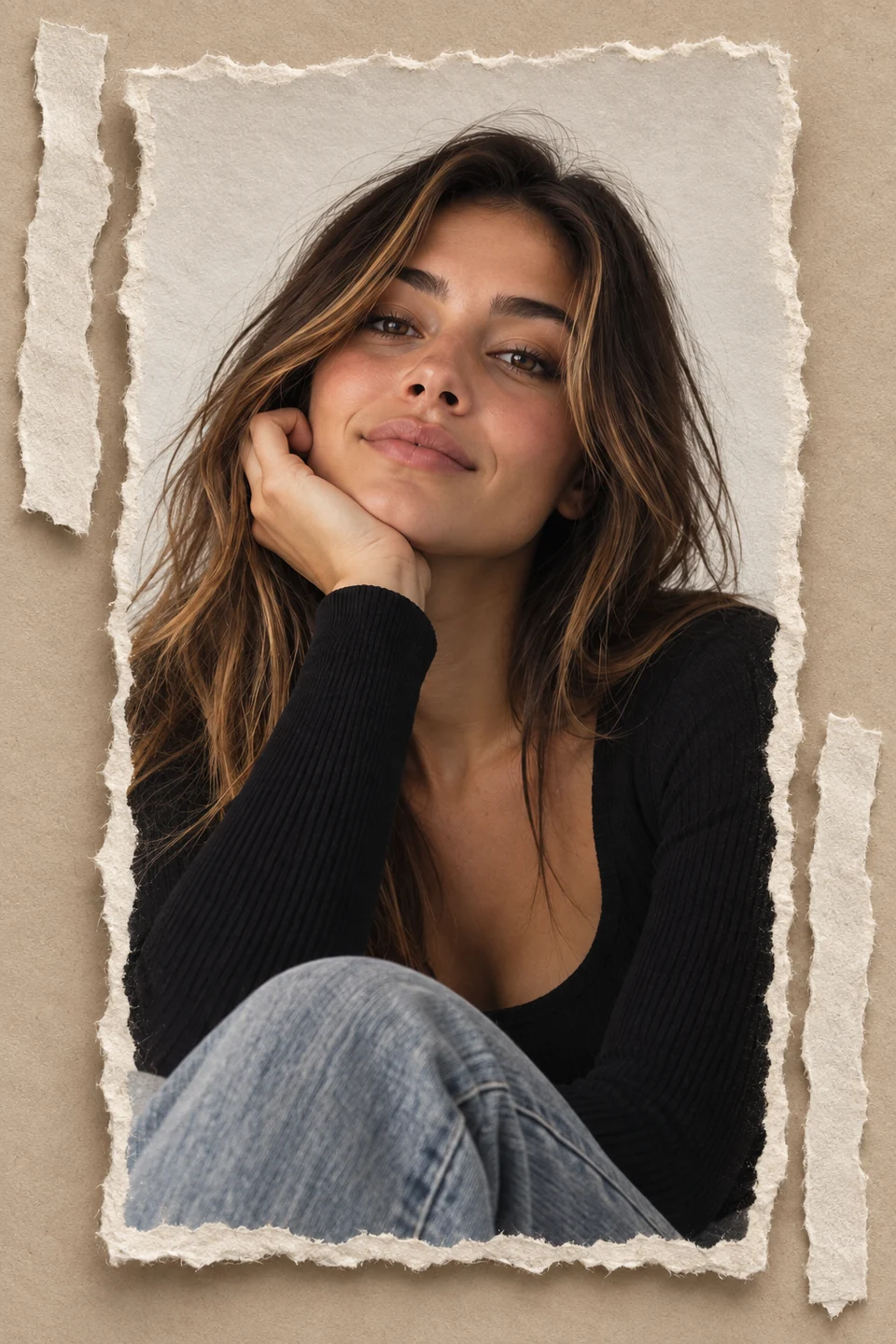
Present the same portrait as one large photographic print with genuinely irregular hand-torn fibrous paper edges on a warm neutral backing.
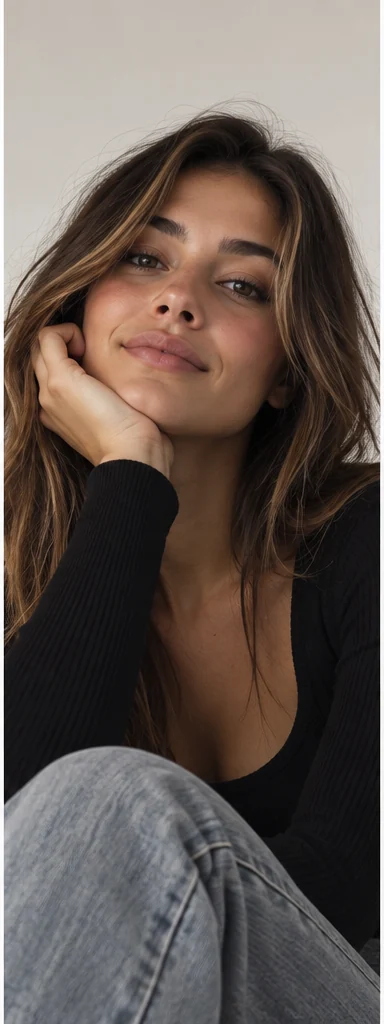
Own image-edit example from the recorded source. One accepted input; not Verified.
A portrait whose face and gesture can remain unobscured.
Present the same portrait as one large photographic print with genuinely irregular hand-torn fibrous paper edges on a warm neutral backing.
Torn edges are a simulated paper treatment; avoid tears through defining facial features.
The torn edge should reveal fibers and irregular thickness while leaving the central photograph readable. Place the strongest tears in quiet areas rather than across facial landmarks.
Check that the edge belongs to the print, not the person's outline. If the result looks like a digital mask, ask for a small contact shadow and visible paper thickness.
/POLAROID — A clean instant-print border provides a more orderly physical-photo treatment.
These are editing suggestions, not additional test observations. Read the practical guide or use the before/after checklist.
Present the same portrait as one large photographic print with genuinely irregular hand-torn fibrous paper edges on a warm neutral backing. Torn edges are a simulated paper treatment; avoid tears through defining facial features.
Input advice and use cases are editorial guidance, not additional test results.
Face and gesture retained with clear paper fibers. Portrait crop slightly broadened; no duplicate face.
2026-09-24 · Work built-in image_gen
These notes describe the named runs, which may use a different subject from the comparison above. They do not guarantee results on another input or a future model. See our testing method.