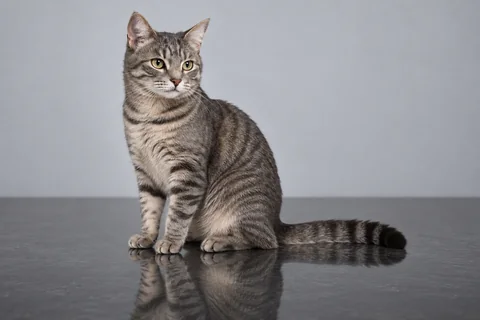
/REFLECTION · CHATGPT
Mirror-floor reflection
Place the unchanged subject on a polished dark reflective floor.
petspeople
Place the same pet beside a mirror with one coherent reflected view.
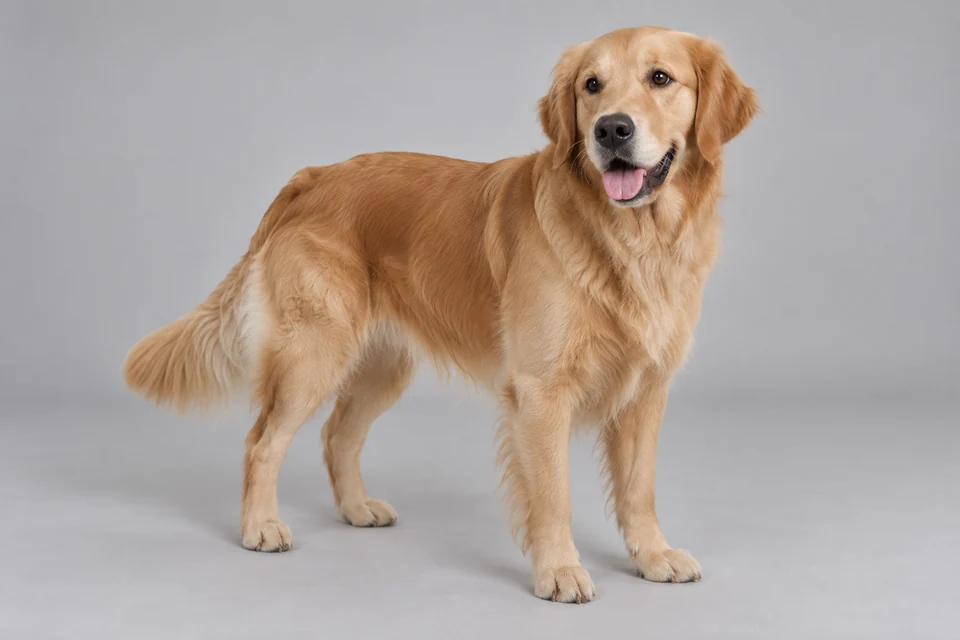
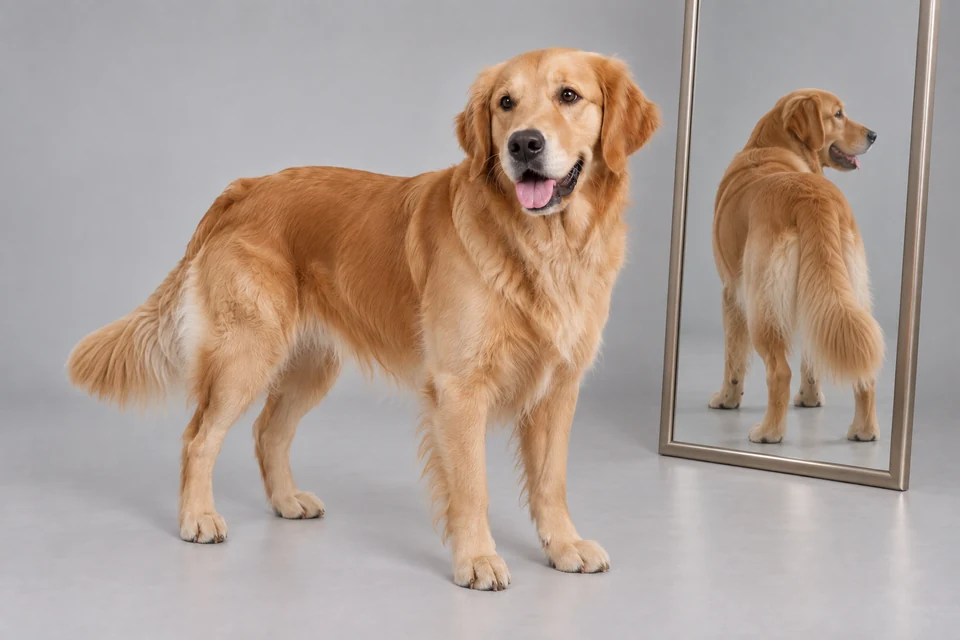
Own image-edit example from the recorded source. One accepted input; not Verified.
A complete internally owned pet photograph with clear anatomy and coat markings.
Place the same pet beside a mirror with one coherent reflected view.
The unseen reflected side is inferred. Check alignment and anatomy; this is a staged creative edit, not a measured optical reconstruction.
A mirror creates a second view whose geometry must agree with the subject and mirror plane. Hidden markings in the reflection are inferred from the available photograph.
Count limbs and compare the reflected pose with the visible one. If the reflection becomes a second animal, simplify the pose and make the mirror boundary clearer.
/REFLECTION — A subdued floor reflection has a simpler compositional role than a separate mirrored viewpoint.
These are editing suggestions, not additional test observations. Read the practical guide or use the before/after checklist.
Place the same pet beside a mirror with one coherent reflected view. The unseen reflected side is inferred. Check alignment and anatomy; this is a staged creative edit, not a measured optical reconstruction.
Input advice and use cases are editorial guidance, not additional test results.
One direct dog and one rear-three-quarter reflection entirely inside the mirror, no extra limbs. Unseen anatomy and optical geometry inferred.
2026-09-24 · Work built-in image_gen
These notes describe the named runs, which may use a different subject from the comparison above. They do not guarantee results on another input or a future model. See our testing method.