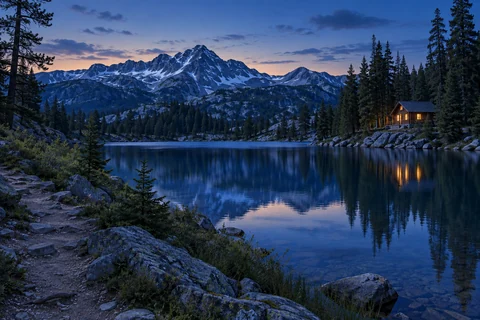
/BLUEHOUR · CHATGPT
Blue-hour landscape
Relight the landscape at blue hour just after sunset.
landscapes
Explore changing light, weather and seasons using an original fictional landscape. Keep fixed landmarks readable and compare reflections, horizons and atmosphere. These are visual concepts, not records of real weather or locations.
Explore 16 effects ↗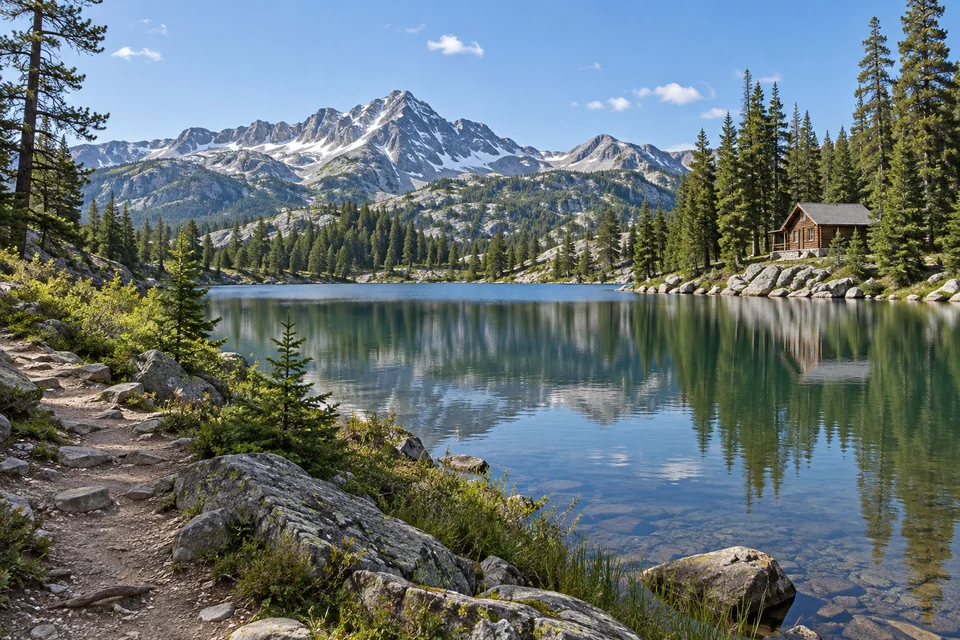
Relight the landscape at blue hour just after sunset.
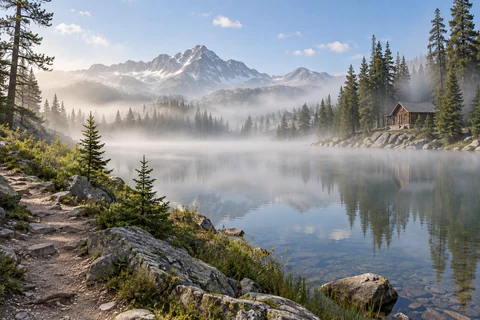
Add layered natural morning fog over the lake and between the existing trees.
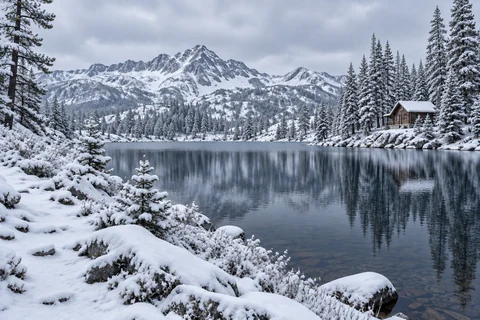
Transform the existing scene into a plausible snowy winter day.
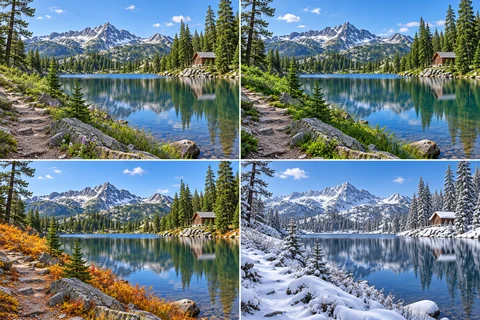
Create one clean two-by-two contact sheet showing the exact same scene and camera in spring, summer, autumn and winter, in that reading order.
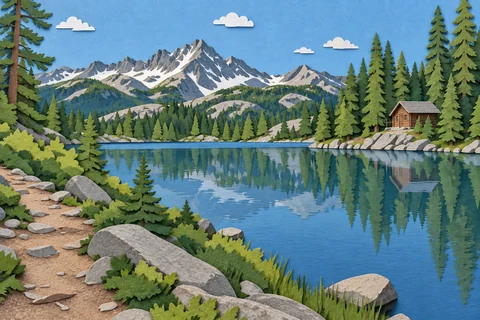
Build the subject from layered cut paper, with clean edges and soft shadows.
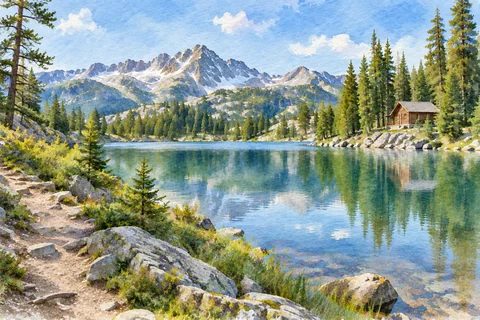
Render the subject in loose watercolor washes with delicate paper texture.
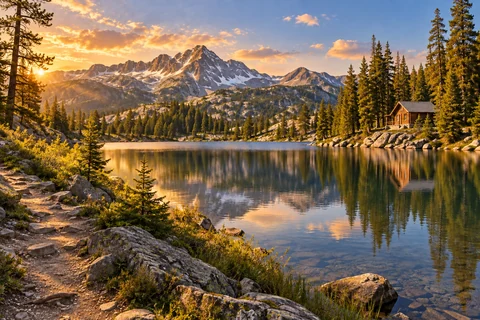
Relight the scene with warm low-angle sunlight and coherent natural shadows.
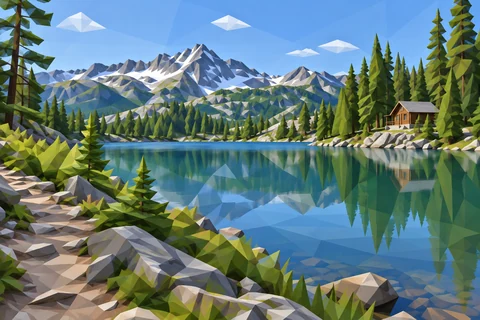
Rebuild the visible subject as an angular low-poly sculpture made from broad flat polygon facets.
Foreground anchors, a horizon and distant forms help you assess FOG, BLUEHOUR or MOONLIGHT. A featureless source makes it harder to see whether the model has preserved the place. Our landscape examples are fictional; their weather and geography are visual concepts rather than records of real conditions.
RAIN affects surfaces and reflections as well as adding streaks. SNOW changes coverage differently on ground, branches and roofs. Compare shorelines, mountain profiles and tree positions before judging the mood. If the scene becomes unrecognizable, reduce the weather change rather than adding more descriptive scenery.
SEASONSET requires consistency across panels. AERIALVIEW reveals inferred terrain from a new viewpoint, while DREAMCORE intentionally introduces impossible elements. Neither supports navigation or factual location claims. Keep reflections aligned with the altered sky or floating forms, and use the source-photo guide to decide when an additional real viewpoint would be more useful than another prompt revision.
Find the right look for your photo.
16 effects with examples
Build the subject from layered cut paper, with clean edges and soft shadows.
Render the subject in loose watercolor washes with delicate paper texture.
Relight the scene with warm low-angle sunlight and coherent natural shadows.
Rebuild the visible subject as an angular low-poly sculpture made from broad flat polygon facets.
Relight the landscape at blue hour just after sunset.
Add layered natural morning fog over the lake and between the existing trees.
Transform the existing scene into a plausible snowy winter day.
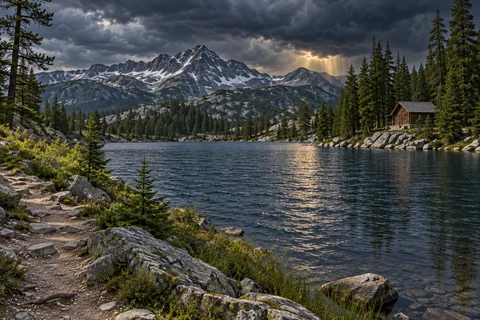
Replace the calm sky with a dramatic approaching storm front: layered dark clouds, a narrow shaft of distant light and modest wind ripples on the lake.
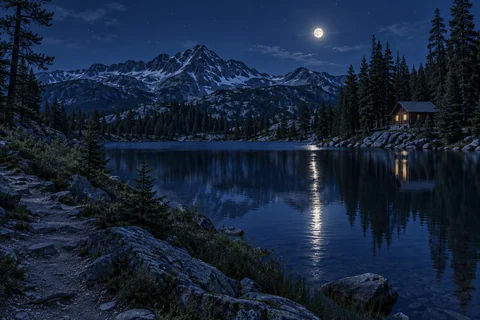
Relight the existing landscape as a moonlit night.
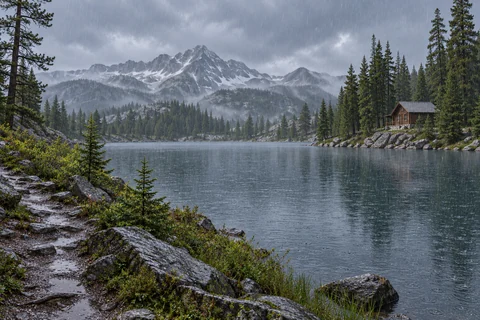
Show the same landscape during moderate daytime rain.
Create one clean two-by-two contact sheet showing the exact same scene and camera in spring, summer, autumn and winter, in that reading order.
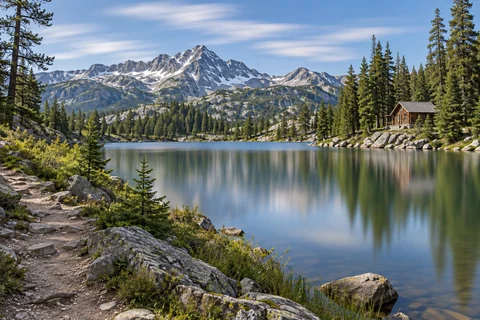
Simulate a long-exposure landscape photograph in neutral daylight: smooth the lake into softly reflective water and stretch the existing light clouds into subtle horizontal streaks.
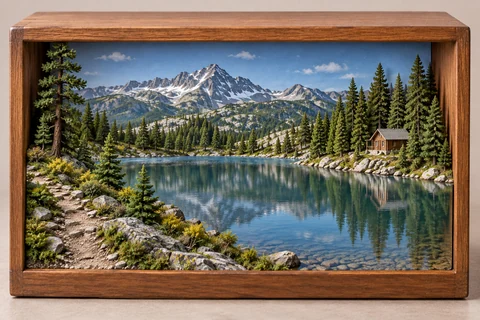
Rebuild the source landscape as one handcrafted miniature diorama contained inside an open-front wooden display box.
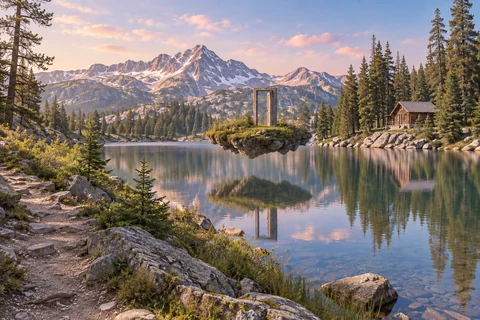
Turn this same alpine lake landscape into a restrained surreal dream scene.
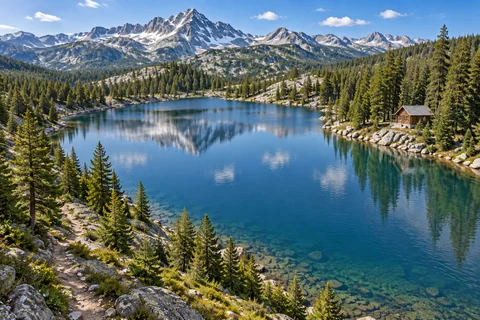
Rephotograph the same alpine lake from an elevated oblique aerial viewpoint, looking down at about forty-five degrees from above the near shore.
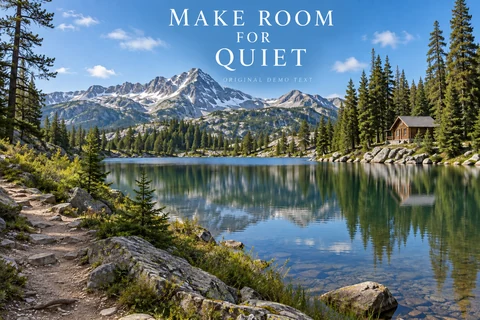
Add original editorial copy to your landscape in a restrained quote-card layout.